The Right Number of Hands: Staffing a Glasgow Mobile Bar Without the Guesswork
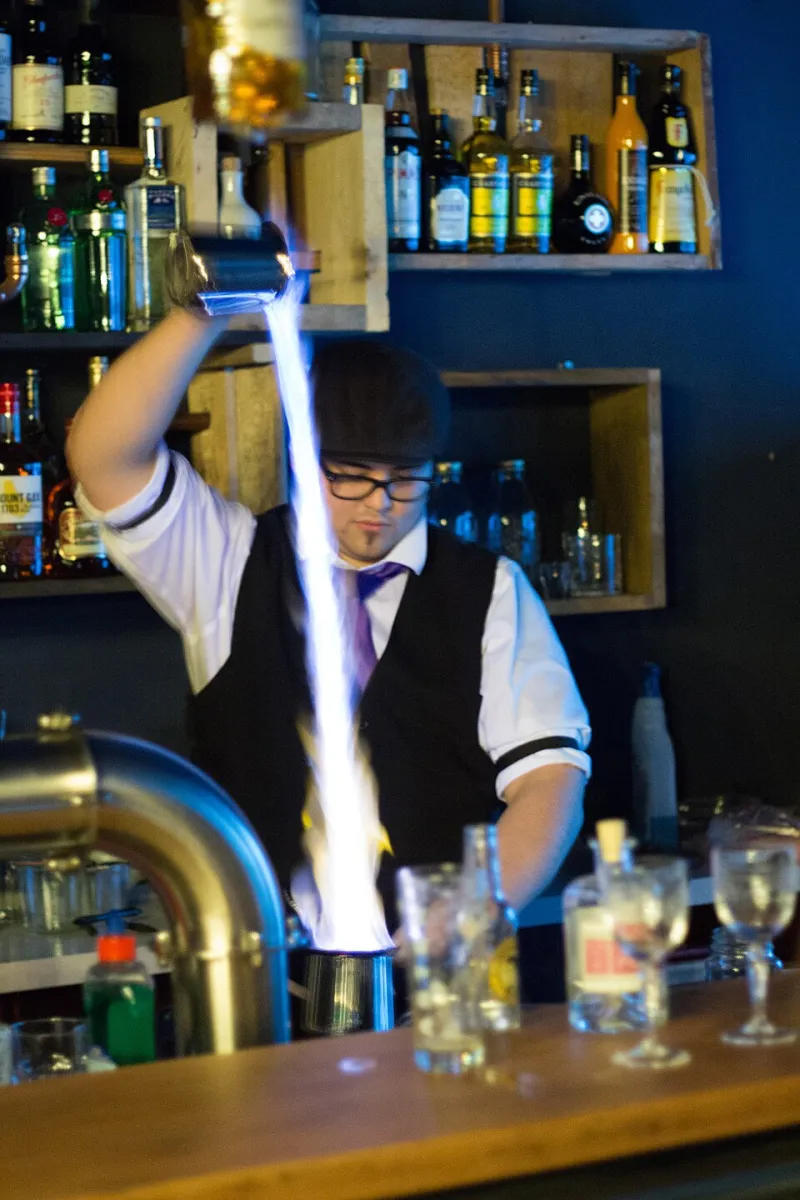
Photo: Stefan Giesbert (www.cocktailpodcast.de), CC BY-SA 4.0, via Wikimedia Commons
There's a moment in every bar booking where the conversation turns from what you're drinking to who's pouring it. It usually arrives right after the cocktail list gets agreed, and it almost always sounds the same: "So, how many staff do we actually need?"
It's a fair question, and the honest answer is that it depends on more than the number on your guest list. A crew that's right for a 70th birthday in a Shawlands bowling club will look wildly overstaffed at a 25-person flat party in Partick. Get it wrong in either direction and everyone notices — either nobody can get a drink, or you're paying for three people to polish glasses that were already clean.
Here's how to think it through properly.
Start With the Room, Not Just the Headcount
Before you count guests, count the obstacles. A single bar station in a hired hall with a clear run to the kitchen is a very different job from a makeshift set-up at the top of a tenement close, three flights up, with a narrow hallway that two people can barely pass in.
Venue layout affects service speed more than most planners expect. If your bar is tucked in a corner away from where people naturally gather, guests will drift, forget to order, then arrive in a clump. If you've got a big space and can run two smaller stations — one near the entrance, one at the far end — you can often serve 150 people with fewer staff than a single crowded bar would need.
Ask yourself three things: how far is the bar from the ice supply, how wide is the serving area, and is there anywhere for people to queue without blocking a doorway or a fire exit. Those answers will shape your staffing far more than a ratio ever will.
The Ratios That Actually Hold Up
As a rough starting point for planning rather than a hard rule, most mobile bar operators in Glasgow work somewhere in this territory:
- Simple serve, beer and wine only: one bartender per 40 to 50 guests.
- Small cocktail list plus beer and wine: one bartender per 25 to 30 guests.
- Full cocktail menu, shaken drinks, garnishes, the works: one bartender per 20 to 25 guests.
- Barbacks: one for every two to three bartenders, more if the bar is a long walk from the stock.
Those figures assume a party of three or four hours with a reasonably spread-out arrival. Shorten the party, or front-load the drinking, and you'll want to add a pair of hands.
The Arrival Rush Is the Real Test
Here's the thing ratios rarely capture: the first forty minutes. At most parties, a big share of guests turn up in a narrow window, all at once, all wanting a drink, all slightly uncertain about what's on offer.
That pinch point is where understaffing becomes visible. Two bartenders can comfortably serve 90 people across an evening; they can't comfortably serve 60 people in the first half hour while also explaining the menu, finding the opener and sorting out the card machine.
If your invitation says 7pm, plan for the bar to be busy at 7:15pm. Either staff for the rush or reduce the friction — a pre-batched welcome drink on arrival, a short printed menu, a clearly signed no-alcohol option — so people can be served quickly without a twenty-second conversation each.
Cocktails Take Time, So Be Honest About Your Menu
A gin and tonic is a fifteen-second job. A clarified milk punch is not. The difference between a three-ingredient highball and a six-ingredient shaken drink with egg white and a double strain isn't marginal — it can triple the time each guest spends at the bar.
If your heart is set on a proper cocktail menu, either staff up or trim the list. Three well-chosen drinks made quickly will always beat eight made slowly, especially at a party where the point is conversation rather than mixology theatre. This is one of the reasons we've argued before that a short menu serves a Glasgow party better than a long one.
The No-Alcohol Question Changes the Maths
A few years ago a no-alcohol option was a courtesy bottle of something in the fridge. In 2026 it's a genuine part of the menu, and at many Glasgow events a quarter to a third of guests will order from it — some because they're driving, some because they're pregnant, some because they simply don't drink.
The catch is that a well-made mocktail takes just as long to build as a cocktail. If you've designed a beautiful zero-proof list and staffed on the assumption that those guests will just have a soft drink, you'll create a queue. Budget bar time for it properly.
Barbacks and Glass Collectors: The Staff You Don't Notice
Barbacks are the reason bartenders stay at the bar instead of disappearing to find ice. On a small job the bartender does it themselves. Above roughly 60 guests, a dedicated barback starts paying for itself in faster service.
Glass collectors are a different role, and one planners often skip. From around 80 guests upward, empty glasses become a real problem — they clutter tables, they get knocked over, and they slow the bar down because there's nowhere to put a fresh drink. One collector can transform how a room feels. At bigger events, it's the difference between a party that looks managed and one that looks like a bomb site by 10pm.
Three Scenarios, Sized Up
The flat party — 20 to 30 guests
One bartender, no barback, and honestly you could probably do it yourself with a well-stocked kitchen. Book a bartender if you want to enjoy your own party rather than spend it hunting for the bottle opener.
The milestone birthday — 60 to 80 guests
Two bartenders, one barback, and a glass collector if the venue is a hired space with tables. Keep the menu to three cocktails plus beer, wine and a no-alcohol option. Pre-batch anything that can be pre-batched.
The hired space — 150 guests and up
Four to five bartenders, two barbacks, one or two glass collectors, ideally split across two stations. At this size, ask the operator for a floor plan as well as a quote — where the bars sit will decide whether the night flows or fights.
Before You Sign Anything
Walk the venue with the bar company if you can. Ask them how many staff they've allowed for and why. A good operator will explain their reasoning rather than just naming a number, and they'll flag the awkward bits themselves — the stairs, the single sink, the lack of a service lift.
Get the staffing figure in writing, along with the hours it covers. And check what happens if the party runs on: extra hours for staff are usually cheaper to agree in advance than to negotiate at midnight.
Get the numbers right and nobody will ever mention them. Get them wrong and it'll be the only thing guests remember.