Doors Open, Glasses Ready: Making the Arrival Half-Hour Work at Your Glasgow Party
Guests rarely remember the fifth cocktail of the night. They remember whether they stood in a draught with their coat still on, unsure where to go, while a bar team looked back at them expectantly. The arrival drink is the handshake of the whole event: brief, revealing and much more important than it looks.
At a Glasgow party, that first half-hour has extra work to do. The weather may be doing its usual impression of a damp grey curtain. Guests arrive in clusters, often all at once, shedding scarves and looking for somewhere to put a bag. A mobile bar can either smooth that moment or turn it into a bottleneck. The difference is rarely the cocktail recipe. It is the plan behind it.
The first half-hour is a logistics problem wearing a party hat
It is tempting to treat the welcome drink as a menu decision. In practice, it is a throughput decision. How many people will arrive in the first ten minutes? Where will they put their coats? Can they see the bar from the door? Is there a clear route past the welcome station, or will early guests block the entrance for everyone behind them?
For a typical Glasgow venue — a west end flat with a narrow hall, a city-centre loft with one lift, a church hall with a heavy fire door, a hotel suite with a long corridor — the arrival flow changes completely. Walk the route yourself before the bar team arrives. Start at the front door, coat drop and toilets, then work out where a tray can safely live without becoming an obstacle course.
The welcome moment should feel generous, but it should also be quick. A guest should be able to hand over a coat, take a glass, clock the room and start chatting within two or three minutes of walking in. If the first drink takes longer than that, the party has already begun to feel like an admin task.
Pick a welcome serve that can be poured, not posed
The best arrival drinks are not the most complicated ones. They are the ones a bar team can batch, chill and pour at speed without losing quality. Forget anything that needs a hard shake per guest, a fiddly garnish or a layer of foam that collapses while someone searches for their plus-one.
A strong Glasgow welcome menu usually has one base drink with two finishes: a standard version, a sparkling version and a no-alcohol version. That keeps the briefing simple and the queue moving.
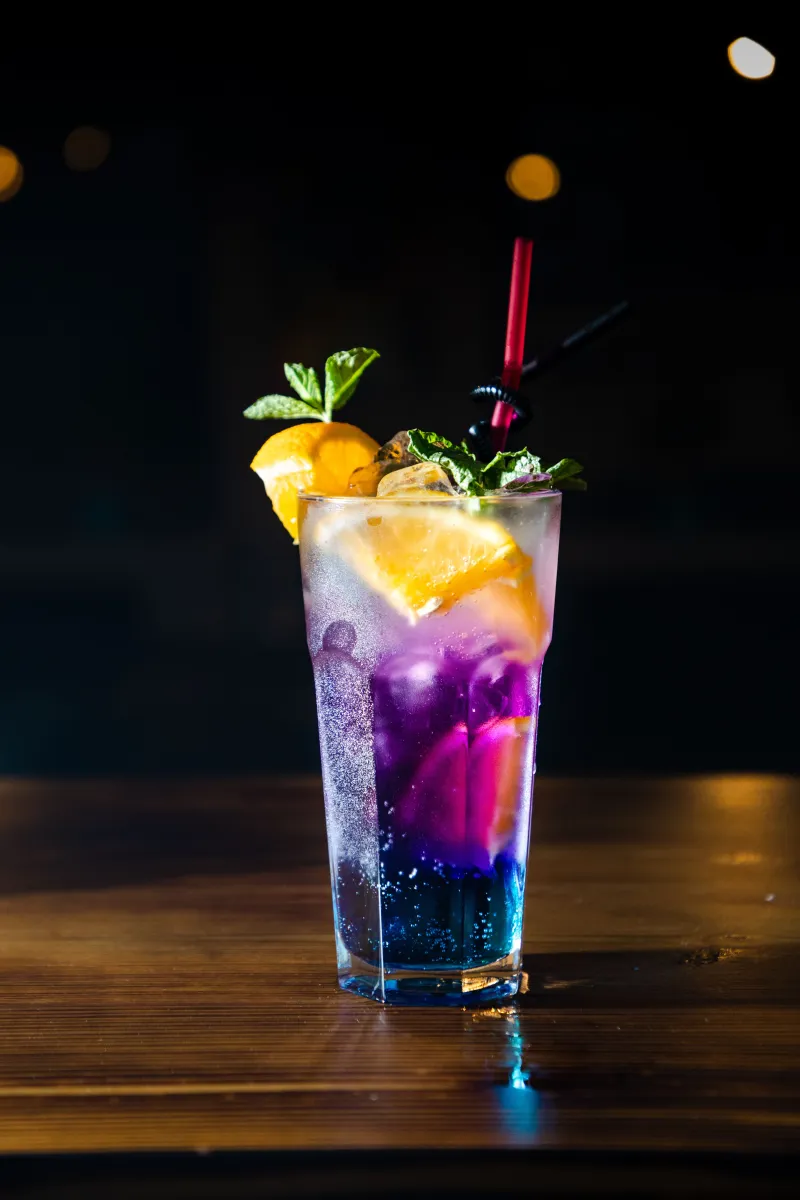
- Raspberry Rickey, batched: gin, fresh lime juice and a good raspberry syrup, topped with soda at the station. Sharp, pink and fast. It suits a mixed crowd and looks like a party without asking for a cocktail shaker.
- Honey Highball: blended Scotch, lemon juice and honey syrup, lengthened with soda. It is a gentle nod to Scotland without turning the welcome drink into a tasting session. Keep the honey syrup light so it does not become sickly.
- Grapefruit Paloma-style: tequila, grapefruit juice, lime and a splash of soda. Batch the base, chill it hard and let the fizz do the work at service.
- Zero-proof cucumber and tonic: cucumber slices, a little lime and tonic over ice. It should look like a proper drink, not a consolation prize. A second no-alcohol option, such as sparkling citrus and rosemary, is worth having if you expect a significant non-drinking group.
One welcome drink is usually enough. A short list is a kindness to guests and a gift to the bar team. If you want choice, offer a house welcome pour and a zero-proof pour. Two taps, not a tasting menu.
Carbonation should happen at the station, not hours before. Pre-batched bases can sit in the fridge; soda and tonic should be opened as needed. Ice should be plentiful and close to hand. If the drink needs a garnish, choose one that can be prepped in advance and dropped in with a single movement — a raspberry, a cucumber ribbon, a grapefruit wedge. Nothing that requires tweezers at 7.05pm.
Staff the rush, not just the night
The arrival rush is a short, sharp shock. A bar team that is perfectly sized for the quiet middle of the evening may be badly underpowered when 70 guests arrive within fifteen minutes. Plan for the peak, then flex back.
As a rough guide, one server passing trays can look after 25 to 30 guests in the first wave. For a party of 80, two people on the welcome station and one tray server is a sensible starting point. For 120 or more, add a runner to restock ice, glasses and bottles so the pourers never have to leave the station.
The welcome station should have two jobs: pour and hand over. Do not ask the same person to pour, explain the drink, answer allergen questions and direct guests to the toilets all at once. Put the menu and allergen information on a sign, and brief one team member as the floating question-answerer if the venue layout is tricky.
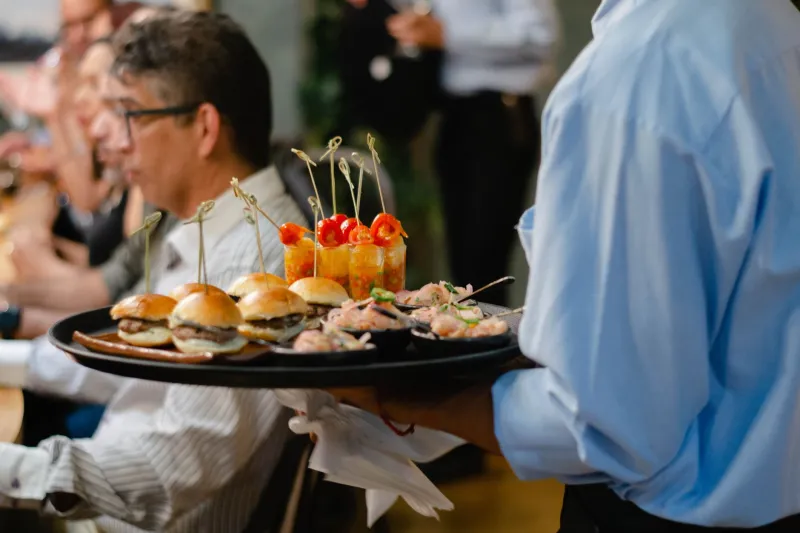
Tray service works well for the first ten minutes. It catches guests as they come in, gives them something to do with their hands and stops a queue forming at the bar before people have settled. After that, open the bar properly and let guests come to it. The tray server can then switch to clearing glasses and topping up the welcome station.
Signage and layout: keep the doorway clear
A welcome drink should not require a announcement. A well-placed A-frame sign or a simple menu board can do the work quietly. Keep the wording short: the drink name, a one-line description, the zero-proof option and a clear allergen note. If the welcome drink contains egg, nuts, gluten or sulphites, say so plainly. Glasgow guests are friendly, but they are also entitled to know what they are drinking.
Position the bar three to five metres inside the room rather than right at the entrance. That gives guests space to step in, look around and move aside. If the venue has a tight hall, use a side table for tray service and keep the main bar further back. Never park a tray station in the fire exit route or in front of the coat rail.
In November and December, coats are the unglamorous make-or-break detail. If guests arrive damp from a Glasgow drizzle, they need somewhere to shed layers before they take a glass. A clear coat drop, a sturdy rail and a few spare hangers will do more for the atmosphere than an extra garnish.
A 30-minute running order
Minutes 0 to 5: doors open. Tray server meets guests with the welcome pour and the zero-proof option. One bar member stays at the station, topping glasses and keeping the surface dry.
Minutes 5 to 15: the main arrival wave. Aim to have most guests holding a drink within ten minutes. Keep the tray moving around the edge of the room, not through the middle of the doorway. Restock ice and glasses before they run low, not after.
Minutes 15 to 25: switch from tray-first to station-first. Guests who arrived early will be ready for a second drink; late arrivals can be pointed to the bar. Clear empty glasses from side tables and window ledges.
Minutes 25 to 30: reset the station for the rest of the night. Wipe the surface, restock garnishes, check the ice supply and make sure the zero-proof option is still visible. The welcome moment is over; the party bar is now open for business.
The pre-event briefing checklist
Before the team leaves the depot, confirm the arrival plan in writing. A short brief beats a long improvisation.
- Expected guest numbers and the likely arrival window, including any coach or taxi drop-offs.
- The welcome drink spec, batch quantities, glass type, garnish and zero-proof alternative.
- Allergen information and a named person who can answer guest questions.
- Venue access times, lift restrictions, stairs and the exact bar position.
- Coat drop location and who is responsible for keeping the entrance clear.
- Staff roles for the first 30 minutes: who pours, who trays, who restocks, who floats.
- Signage placement and a spare menu board in case the first position does not work.
- A wet-weather plan for damp coats, slippery floors and trays that need shelter.
The arrival half-hour is not about showing off. It is about removing friction. Get the first drink into guests' hands quickly, keep the doorway clear and make the no-alcohol option as easy to choose as the house pour. Do that, and the room warms up on its own. The bar can then settle into the longer, slower work of the night — which is exactly what a welcome moment is for.