Where the Bar Actually Goes: A Glasgow Neighbourhood Guide to Mobile Bar Hire
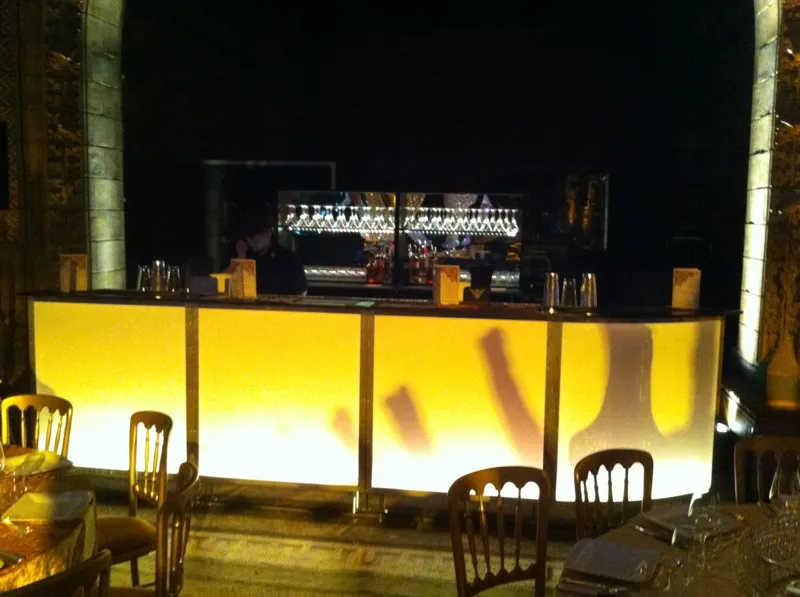
Photo: Lgslater, CC BY-SA 3.0, via Wikimedia Commons
A mobile bar is not a piece of furniture you book by Instagram photo. In Glasgow, the postcode decides whether the bar arrives at 5pm or sits in a van on a double yellow while the venue manager shrugs. After enough Christmas parties, weddings and birthday dos, the pattern is clear: access beats aesthetics every time.
This is a planner's guide for 2026, area by area. It is opinionated because the costly mistakes are predictable. The aim is to help you match the bar to the building, not force a beautiful bar into a back court that cannot take it.
West End: charming, tight and resident-heavy
West End venues include flats off Dumbarton Road, halls near Kelvingrove, bars in Finnieston, and spaces around Partick and Hillhead. They are beautiful and awkward. Tenement closes are narrow, stairs turn, and the front door is often 75cm. Measure before you pay a deposit. A bar that splits into 1m sections is better than a single welded unit that cannot make the turn.
Parking is a myth on Byres Road on a Saturday. Book a loading bay or use a van that can unload fast. Power in older buildings can be fragile: one 13-amp socket, no blenders, LED lighting, and fridges on a separate circuit if possible. Noise is the other issue. Residents are close, back courts echo, and a 10pm or 11pm finish is common.
For 50 guests, a 2m bar and one server is usually enough. For 100, go to a 3m bar and two servers. If the venue is upstairs, budget for two people and a stair dolly. The West End rewards preparation more than any other part of the city.
Southside: gardens, lanes and back-court acoustics
The Southside covers Shawlands, Strathbungo, Pollokshields, Queen's Park and Mount Florida. Access is often through back lanes or gardens, and gates may be only 80cm wide. Uneven paving means levelling feet and a bar that can be carried in pieces. Outdoor bars need RCD protection, covered cable runs and a wet-weather plan that is more than a hopeful glance at the sky.
Noise travels in back courts. Keep doors closed, keep speakers away from walls and tell guests that the lane is not an extension of the party. If you are selling alcohol, you need an occasional licence from Glasgow City Council. If it is a private party, still check the venue conditions and talk to neighbours before they talk to the council.
For 60 guests in a garden, a 2m bar and one server works. For 120, use a 3m bar and two servers, plus a separate drinks station so the queue does not block the food. Do not put the bar at the bottom of a garden with no lighting and expect guests to find it.
East End: space, loading and security
The East End covers Dennistoun, Bridgeton, Calton, the Barras area and venues near Glasgow Green. You get more warehouse space and wider pavements, but loading is not always easy. Roller shutters and loading bays are good. Uneven floors, poor lighting and a lack of nearby parking are not.
Power can be three-phase or not. Ask for a socket map rather than assuming. Noise curfews vary, and security and queue management matter more here because the rooms are bigger. For 150 guests, use two 2.5m bars or one 5m bar with two service points. Do not put the only bar at the far end of a huge room. Put it where people arrive, then let them move.
The East End is where a mobile bar can feel generous. It is also where a lazy layout can make 150 people stand in a single-file queue while the band plays to an empty floor.
City centre: lifts, loading bays and curfews
City centre venues in Merchant City, Blythswood and Central have service lifts, concierge desks, loading restrictions and pedestrian zones. Book loading times in advance. Measure the lift door and the corridor turn. Space is often compact, so a 2.5m bar can be too much. Power is usually reliable, but do not overload a hotel socket with a fridge, an urn and a lighting rig.
Noise is controlled by the premises licence, and curfews are not negotiable. For 80 guests in a hotel suite, a 2.5m bar and two servers is sensible. For 150, use two bars or a bar plus a pre-batched drinks station. The city centre is not the place for a bar that needs a generator and a prayer.
Matching the setup to guest count
For 30 to 50 guests, a 2m modular bar, one server and two cool boxes is a clean setup. For 80 guests, move to a 3m bar, two servers and a visible back bar for glass and ice. For 150 guests, use 4m to 6m of bar or two separate 2.5m bars, with three servers and a runner. The runner is not a luxury. The runner is what stops the queue from swallowing the dance floor.
Five questions to ask before you pay a deposit
First, what is the access route, including door widths, stairs, lifts and turns? Second, what power is available, and where are the sockets? Third, who holds the licence, and what does it allow? Fourth, what is the noise curfew, and who enforces it? Fifth, where can the bar get water, dump ice and store waste?
If the answers are vague, the quote is not finished. A good mobile bar operator will ask these questions before you do. A great one will turn up with a plan for the stair, the socket and the last train home.
Glasgow is a city of great rooms and awkward corridors. Pick the bar that fits the building, and the night has a much better chance of fitting the bar.