Plan B Behind the Bar: A Glasgow Mobile Bar Contingency Playbook
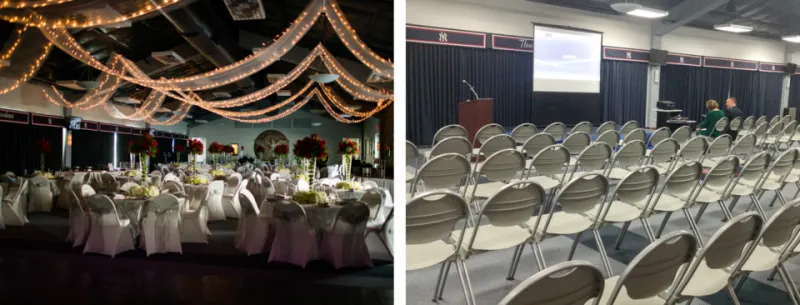
Photo: George M. Steinbrenner Field, CC BY-SA 4.0, via Wikimedia Commons
Glasgow does not really do dramatic weather. It does persistent, sideways, inconvenient weather. That is why every mobile bar needs a Plan B that has been written down, tested and briefed to staff — not just mentioned in a hopeful email.
This is the MiniBar Glasgow survival guide for the things that actually go wrong at events: rain, power, water, licences, guest numbers and venue access.
Walk the venue before you book the bar
My rule is simple: if the bar cannot be built and tested before the first guest arrives, you have not booked a bar, you have booked a queue.
Check the loading bay, door widths, lifts, stairs and the route from van to service point. Ask when the venue allows access and when it needs the space back. A Merchant City venue with a closing time and a resident above it is a different job from a marquee in a Southside garden.
Rain is not a vibe
Anyone who says they will just move the bar inside on the day has not tried to move a full back bar through a Glasgow venue at 7pm. Decide the rain trigger in advance. Is it 30% chance, light drizzle, or the first puddle on the dancefloor?
Have side walls, a covered serving area, non-slip matting and a proper route for guests. If the bar is on grass, assume mud. Duckboards, matting or a temporary floor are not luxury extras in Scotland. They are basic kit.
Paper menus turn to pulp. Use chalkboards or wipe-clean menus. Keep spare towels and bin bags for covering stock.
Power: assume the socket is not where you need it
Ask what the venue socket actually powers, not just whether there is one. Check amps, cable routes and whether the bar will trip the whole room. Test the load before guests arrive.
If the answer is a generator, make sure it is quiet, secure and away from the serving area. Have battery lights, a torch and a backup plan for blenders. A cocktail menu that relies on crushed ice and three electrical appliances is a fragile menu.
Water and ice
Water access is not the same as a glasswash. Ask where the tap is, who can use it, and whether the venue wants you filling jugs in the customer toilets. If not, bring bottled water and handwash.
Ice is the quiet failure point. A late ice delivery, a warm cool box or an overfilled gin table can sink service. Store ice away from heat, decant in smaller batches and keep a contingency bag.
Licences and timings
Glasgow City Council licensing rules and the venue's own conditions are not the same thing. An occasional licence is not a magic wand, and a venue's licence may still restrict last entry, noise or alcohol sales.
Build a buffer into the timetable. Do not promise a 1am cocktail if the licence stops at midnight. Brief staff on the cut-off, and make sure the bar clock matches the venue clock.
Guest numbers will surprise you
RSVPs are optimistic. Plan stock for 15% more guests than confirmed, and batch in litres rather than guesses. If the guest list doubles, a short menu saves you. If it halves, a short menu saves you money.
Have an emergency top-up plan: a local cash and carry run, a nearby partner bar or a simplified drinks list. Do not wait until the gin runs out to invent one.
Venue access restrictions
Loading windows, pedestrian zones, parking suspensions and narrow closes are normal Glasgow problems. A bar arriving at 6pm for a 7pm start is not a plan, it is a drama.
Keep boxes off the dancefloor. Keep the service route clear. Label cases so staff can find the vodka without unpacking the whole van.
Cocktail menu tweaks for Plan B
Cut the menu to four drinks. Two highballs, one pre-batched classic and one zero-proof option is a strong event menu. Pre-batch anything that can be pre-batched. Use dehydrated garnishes if rain or volume is likely. Avoid drinks that need three fresh garnishes and a blender.
If power fails, the menu should switch to wine, beer, pre-batched negroni and simple highballs without staff having to think. Print that fallback list and tape it inside the bar.
The MiniBar Glasgow contingency checklist
- Rain plan agreed, with side walls and non-slip flooring.
- Power tested, with generator backup if needed.
- Water access confirmed, plus bottled water backup.
- Ice quantities and delivery times double-checked.
- Licence conditions read, not assumed.
- Staff briefed on last orders and guest capacity.
- Emergency stock plan in place.
- Venue access and loading times confirmed in writing.
- Short fallback menu ready.
A good mobile bar is not the one with the prettiest frontage. It is the one that keeps pouring when the rain comes in, the power dips and the guest list grows. Plan for the worst Glasgow evening, and the good ones look easy.